
The Pakistan Minerals Investment Forum 2026: Reko Diq, the Pipeline and the Conversion Gap
Pakistan will present about $40 billion of project potential in Islamabad this week. In FY2026 it attracted $1.637 billion of net foreign direct investment. This analysis sets out what the gap is made of, what Reko Diq is worth at current copper prices, why the price is not the binding constraint, and which observable changes would alter the conclusion.

Pakistan will present about $40 billion of project potential in Islamabad this week. In FY2026 it attracted $1.637 billion of net foreign direct investment. This analysis sets out what the gap is made of, what Reko Diq is worth at current copper prices, why the price is not the binding constraint, and which observable changes would alter the conclusion.
In short
- The Pakistan Minerals Investment Forum 2026 takes place on 12 and 13 November at the Jinnah Convention Centre in Islamabad. It is endorsed by the Special Investment Facilitation Council, chaired in its closing session by the Prime Minister, and attended by the army chief, Barrick's chairman and Ivanhoe's founder.
- The SIFC pipeline comprises about 38 projects with $40 billion of stated potential. Net foreign direct investment in FY2026 was $1.637 billion, 34 percent lower than the year before, and gross outflows absorbed 54 percent of gross inflows. The ratio between announced potential and recorded investment is about 24 to 1.
- At $13,955 a tonne, Reko Diq's Phase 1 would generate roughly $2.8 billion to $3.3 billion of gross copper revenue a year. Balochistan's 25 percent interest would be about $700 million to $840 million of that, before costs, and the state's fiscal instruments begin to pay only once the mine produces.
- The copper price is not the binding constraint. The physical market is in surplus in 2026 and 2027, and the anchor investor has slowed the project anyway. The constraints are security, financing and a bankable export route.
Two measures that are not meant to be equal
On 12 and 13 November the government will host the Pakistan Minerals Investment Forum 2026 at the Jinnah Convention Centre in Islamabad, with the Special Investment Facilitation Council as endorsing body, OGDCL as founding partner and Wood Mackenzie as lead conference producer. The centrepiece of the programme is a project pipeline: about 38 projects, spanning mining, industry, railways, roads, maritime affairs, power, information technology, pharmaceuticals, health, tourism and food security, with an estimated investment potential of $40 billion. Officials gave that figure to the Senate Standing Committee on Cabinet Secretariat in a briefing reported on 30 October, and the five refineries that have signed implementation agreements, worth about $6 billion, are the most concrete component of it.
In the same week, the State Bank of Pakistan's balance of payments data record a different number. Net foreign direct investment in FY2026 was $1.637 billion, against $2.477 billion in FY2025, a fall of 34 percent. Gross inflows were $3.568 billion, but gross outflows were $1.931 billion, so 54 percent of the capital that arrived also left. Total foreign investment, which adds portfolio flows and foreign public investment to direct investment, fell 74 percent to $451 million, and the portfolio component was itself negative. Set the pipeline against the flow and the ratio is about 24 to 1.
The comparison is not a like-for-like one, and it should not be presented as though it were. A pipeline is a stock of intentions accumulated over several years, while foreign direct investment is a flow recorded over twelve months; a single large project that reaches financial close can take years to appear in the flow, and the $40 billion covers every sector rather than mining alone. The word "potential" is carrying a great deal of weight in the official description, and the committee was told that the pipeline is a statement of what could be built rather than a record of what has been committed. What the ratio does establish is the scale of the conversion task: if a quarter of the stated potential were realised over five years, the annual inflow would need to run about a fifth above the FY2026 figure and sustain that level for five consecutive years.
The quarterly data make the same point at a finer grain. In July to September 2026, net foreign direct investment was $719.7 million. Financial businesses accounted for $191.3 million, power for $139.4 million, trade for $115.7 million and mining and quarrying for $102.7 million, or about 14 percent of the total. Mining is therefore a material recipient, and it is larger than information technology ($11.1 million) or oil and gas exploration, which recorded a net outflow of $8.0 million in the same quarter. It is also the fourth-largest sector in a quarter when it was the government's flagship, which is a useful corrective to the assumption that the sector is already the main channel through which foreign capital enters the country.
These figures are provisional, they are lumpy, and a single transaction can move a sector's quarterly number. The State Bank revises them, and the immediate source of an investment is not the same as its ultimate owner, so the country and sector tables describe where capital arrived from rather than whose capital it is. None of that undermines the central observation. The pipeline is large, the recorded flow is small, and the distance between them is the subject that a forum can describe but cannot close.
What the forum is for, and what its agenda concedes
The speaker list is unusually senior for a sector conference. The Prime Minister will chair the closing session; the Deputy Prime Minister and Foreign Minister, Ishaq Dar, will inaugurate it; the Chief of the Army Staff and Chief of Defence Forces, Field Marshal Syed Asim Munir, is on the programme alongside the Minister for Petroleum, Ali Pervaiz Malik. The international list includes John L. Thornton of Barrick, Robert Friedland of Ivanhoe Mines and Mustafa Aksoy of Calik Group, with senior representatives of the Asian Development Bank, the World Bank Group and the Federal Institute for Geosciences and Natural Resources. The technical programme carries more than 50 peer-reviewed papers, an international exhibition, a European pavilion and a set of procurement briefings.
That composition tells you what the event is designed to do. It brings together the officials who can unblock a file, the financiers who can price a project and the companies that can build one, in a setting where meetings can be arranged at short notice. It is an access event, and access is a genuine input in a market where the alternative is a sequence of formal letters to provincial departments. What it is not is a transaction mechanism: the published programme contains no licence round, no tender and no allocation of ground, so the forum can signal intent and convene the relevant people but it cannot itself convert a project into a financed one.
The agenda is more revealing than the speaker list. The sessions cover investor-ready jurisdictions, critical minerals and the energy transition, financing early-stage exploration, workforce development, women's participation in mining, next-generation projects, geological survey collaboration, infrastructure and export corridors, environmental and social standards, and national capability development. Geology appears mainly as survey collaboration and as more than 50 technical papers; the programme is organised around finance, labour, infrastructure and regulation. That is an implicit admission that the resource itself is not the binding constraint. A country that believed its problem was underexplored would make exploration the centre of the programme; a country that believes its problem is conversion puts financing and corridors there instead.
The event also illustrates a structural feature of Pakistani mining that investors need to understand before they negotiate. The state is simultaneously the host of the forum, the regulator of the sector, the licensor through its provinces, and an equity holder in the flagship project through state-owned companies. That concentration can accelerate coordination, because a single convening authority can move a file between ministries. It also blurs accountability, because the same officials who set the terms are the ones who benefit from them, and a dispute with the state can therefore become a dispute with a shareholder.
The asset: what Reko Diq is, and who owns it
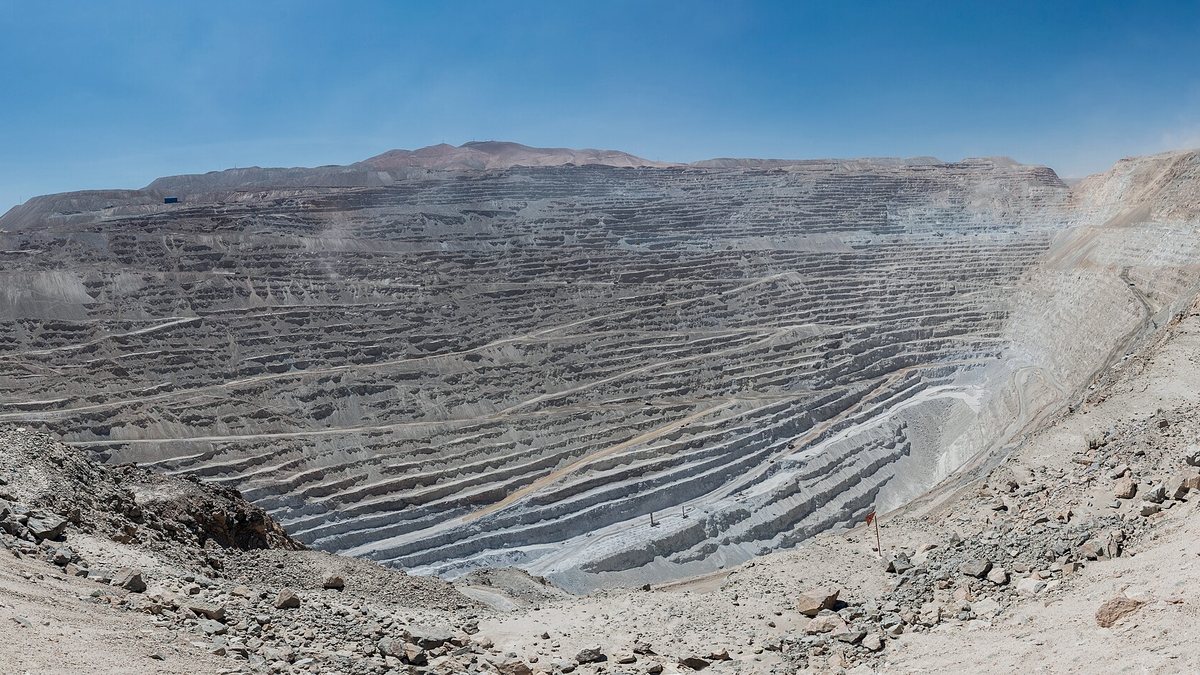
Reko Diq sits in Chagai district in Balochistan, close to the borders with Iran and Afghanistan, and Barrick describes it as one of the world's largest undeveloped open pit copper-gold porphyry deposits. The reserve-based plan envisages about 37 years of production and, over the life of the mine, roughly 13.1 million tonnes of copper and 17.9 million ounces of gold. Phase 1 is designed to process about 45 million tonnes of ore a year and to produce roughly 200,000 to 240,000 tonnes of copper, with gold credits; a second phase would double processing capacity. At peak construction the project was expected to employ about 7,500 workers, with roughly 4,000 long-term operational jobs, which is relevant both to the local benefit case and to the scale of the security and logistics requirement.

The ownership structure is the template the state now prefers, and it is worth reading closely because any new investor will be offered a version of it. Barrick holds 50 percent and operates the project. The Government of Balochistan holds 25 percent, of which 10 percent is free-carried and non-contributing and 15 percent is held through a provincial special purpose company. The remaining 25 percent is held by federal state-owned entities linked to OGDCL, PPL and GHPL. The project's title package comprises a mining lease, an exploration licence, surface rights and a mineral agreement that stabilises the fiscal regime for a defined period, and it is the mineral agreement rather than the geology that a lender will underwrite when it sizes a loan.
Two features of that structure matter more than the percentages suggest. The first is that 50 percent plus operatorship gives Barrick control of the schedule, the procurement and the technical decisions, so the state's 25 percent is an economic interest rather than a management one; a partner that wants influence over how the money is spent needs more than a minority stake and a board seat. The second is the free-carried interest. Ten percent is carried without a funding obligation, which means the province receives a share of distributions without having contributed to capital, but the distributions arrive only after operating costs, debt service, taxes and the recovery of capital, so the benefit is back-loaded into the 2030s rather than available during construction. Free-carry is a good asset for a patient holder and a poor one for a government facing a short political cycle.
The history is part of the price. The project was suspended in 2011 after a dispute over the legality of its licensing process, Tethyan Copper took the case to the International Centre for Settlement of Investment Disputes, the tribunal found Pakistan liable in 2017 and an award of about $5.8 billion followed in 2019. The 2022 framework that reconstituted the project set out to resolve that award and to replace Antofagasta with Pakistani parties. A sponsor who cannot discuss that sequence fluently will be treated as unprepared by the lawyers and financiers in the room, and a supplier who does not understand it will not understand why a counterparty's financing is slow. It is not a reason to avoid Pakistan, but it is a reason to price the country's legal risk explicitly rather than assume it has been retired.
The arithmetic of the delay
The value of the asset is not seriously in dispute. At the LME cash price of $13,955 a tonne on 6 November, Phase 1's output is worth between $2.8 billion and $3.3 billion a year in gross copper revenue, before costs and excluding gold. Table 1 sets out the range under three price assumptions. The middle row is the market price on the date of writing; the top row is a price roughly 14 percent lower, and the bottom row is close to the record close of $14,999 a tonne set on 9 September 2026.
| Copper price, USD a tonne | At 200,000 t, USD bn | At 240,000 t, USD bn | Balochistan 25%, at 240,000 t, USD m |
|---|---|---|---|
| 12,000 | 2.40 | 2.88 | 720 |
| 13,955 (LME cash, 6 November 2026) | 2.79 | 3.35 | 837 |
| 15,000 (record close was 14,999 on 9 September 2026) | 3.00 | 3.60 | 900 |
Three comparisons make the scale concrete, and each of them is a gross figure that should be read with the caveats below. The province's 25 percent share at the top of the output range, about $840 million a year, is roughly half of the net foreign direct investment that entered the whole country in FY2026. The government's revised capital estimate for Phase 1 alone, $7.723 billion, is nearly five times that same national figure. And the increase in the capital estimate, from $6.7 billion to $7.723 billion, is $1.023 billion, or about 62 percent of last year's entire net foreign direct investment: a single revision to a single project is equivalent to more than half a year of the capital the country actually attracted.
Those figures are gross revenue and gross capital cost, and neither is profit. Operating costs, capital recovery, debt service, royalties and tax all rank ahead of distributions, and the gold credits that would add to revenue are excluded here. The purpose of the table is not to value the project; it is to establish that the resource is large enough, at almost any plausible price, for the constraint to lie elsewhere. A project that can generate $2.8 billion of gross revenue a year at a price 14 percent below the market does not need a higher copper price to be worth building. It needs a set of conditions that a lender, an insurer and a contractor can accept.
The capital estimate has moved in one direction and the schedule has moved in the other. Barrick's earlier figure for Phase 1 was $5.6 billion to $6.0 billion. The government approved a revised package in September 2025 that raised the estimated cost to $7.723 billion, about 15 percent above the $6.7 billion plan it replaced, and a second phase would add $3.3 billion to $3.6 billion. Barrick opened a review of the project in February 2026 and confirmed on 2 April that development would be slowed, capital spending reduced and the review extended to mid-2027, citing the security environment in Pakistan and the region. First production, previously targeted for the end of 2028, may now arrive in 2029 or later. The financing is moving at the same pace: the $1.25 billion package under consideration at the United States Export-Import Bank is itself under review against a revised cost base, with the International Finance Corporation expected to participate in the final structure.
The fiscal consequence of that timetable is asymmetric, and it is the part of the analysis that matters most for a Pakistani reader. Almost every instrument through which the state captures value from Reko Diq is production-linked: equity dividends on its 25 percent, royalties under provincial law, and corporate tax on profits. There is no meaningful cash flow during construction and none during a review, so a delay does not redistribute value between the company and the state in the way that a change in the fiscal terms would. It defers the state's entire claim by a year, and it does so at a point when the province's political timetable is much shorter than the mine's 37-year life. The company can recover part of a delay through a longer mine life or a higher price; a government that expected to show the benefit within one electoral cycle cannot.
A higher capital cost compounds the same asymmetry. The additional capital has to be recovered from revenue before distributions, so it delays the province's receipts and reduces their present value, while the sponsor spreads its exposure over the remaining life of the mine. The difference between the two positions is one of timing rather than ultimate incidence, but timing is what a finance ministry and a provincial government actually experience, and it is why a cost overrun on a single project is a fiscal event even when the project remains profitable.
Why a record copper price has not moved the project
On 9 September copper set a record close of $14,999 a tonne. By 6 November the LME cash price was $13,955, still 26 percent higher than a year earlier and 10.8 percent higher than at the start of the year. On any reading, this is the price environment in which a copper project should be financed, and the fact that the anchor investor has slowed the project anyway is the most informative data point of the week.
The physical market explains why the price should not be read as a signal of present scarcity. The International Copper Study Group expects a surplus of about 104,000 tonnes in 2026 and 368,000 tonnes in 2027. LME stocks rose from 145,325 tonnes at the start of January to 316,675 tonnes on 6 November, an increase of about 118 percent, and mine supply is growing at about 1.3 percent this year. A near-record price alongside a forecast surplus is not a contradiction: it is a statement about time. The market is pricing the end of the decade, when demand from grids, data centres and electrification is expected to outrun new supply, rather than the current balance. That is a reasonable basis for a long-term investment case, but it is a poor basis for a construction decision, because a mine that takes five years to build will sell into a market whose balance nobody can forecast with confidence.
Trade policy adds a second layer of uncertainty. The United States has applied a 50 percent tariff to semi-finished copper products since August 2025, with ores, cathodes and scrap exempt, and a phased tariff on refined copper of 15 percent from 2027 and 30 percent from 2028 was still under review as of September 2026 according to press reports. The tariff has drawn metal into American warehouses, which is one reason LME stocks have risen, and it has made the price of copper in different markets diverge. For a project that will sell concentrate rather than refined metal, the direct exposure to a refined-copper tariff is limited, but the uncertainty affects the price deck that a lender will accept and the offtake terms that a smelter will offer. A sponsor cannot underwrite a five-year construction programme on a price that is being set partly by a tariff decision that has not been taken.
None of this means the copper price is irrelevant. It sets the ceiling on what the project can earn and it determines whether a marginal project is viable at all. What it does not do is resolve the three constraints that a credit committee, an insurer and a contractor will each test before they commit. Security is the first: Barrick has said that full construction depends on a sustained improvement, which is a condition with a cost, a counterparty and an implementation schedule rather than a communique. Financing is the second: a lender responds to a completed feasibility study, a fixed cost base, an offtake agreement or a sovereign support structure, and the review of the cost base is precisely what has put the Export-Import Bank package back into review. Logistics is the third: an export corridor from Chagai to the coast has to be bankable, which means a tariff, a completion date and an agency responsible for both.
The forum's agenda names all three, in the language of panels and sessions. The market will want them in contracts, and the distance between the two is where the conversion problem sits.
The pipeline problem, in stages
The useful way to think about the $40 billion is not as a total but as a sequence of stages, each of which requires a different institution and each of which can fail independently. Table 2 sets out the stages and the evidence that a project has reached them. An announcement and a mine are separated by at least four decision points, and the probability of clearing all of them is much lower than the probability of clearing the first.
| Stage | What has to be true | Who controls it | Where it usually stalls |
|---|---|---|---|
| 1. Announced | A government or company states an intention, often at an event | Sponsor, SIFC | Publicity outruns documentation |
| 2. Agreement | Definitive terms, fiscal stabilisation, statutory approvals | Sponsor, province, cabinet | Terms renegotiated, approvals lapse |
| 3. Financial close | Lenders satisfied on cost, offtake, security and insurance | Export credit agencies, DFIs, banks | Cost base moves, risk not insurable |
| 4. Construction | EPC contract, site access, logistics, security | Operator, contractor, province | Land, security, corridor |
| 5. Commissioning | Power, water, workforce, grade reconciliation | Operator, regulators | Skills, utilities, technical |
| 6. Production | Ramp-up, offtake, fiscal flows | Operator, offtake partners | Price, grade, logistics |
Most public discussion collapses those six stages into one, which is why a pipeline figure and a disbursement figure can be reported in the same week without anyone treating the difference as the story. The five refineries that have signed implementation agreements are a useful illustration: at about $6 billion they are together worth more than three times the net foreign direct investment Pakistan received in FY2026, and they have cleared stage two. Whether they reach stage three depends on financing, and whether they reach stage five depends on construction, and neither of those outcomes is visible in the announcement.
The information problem makes the conversion rate hard to measure. There is no public register that records, for each project in the pipeline, the stage it has reached, the value that has been committed, the counterparty that has signed and the date of the last update. The pipeline exists as a number in a committee briefing and as a list in a presentation, not as a dataset that a journalist, a lender or a provincial department can query. A register of that kind would be a modest administrative reform with a disproportionate effect on credibility, because it would allow a claim to be checked rather than believed, and it would make the conversion rate an object of policy rather than a matter of assertion.
The absence of a register also distorts the incentive of the institutions involved. A project that is announced but not financed produces a headline at no fiscal cost, while a project that is financed but delayed produces a problem that has to be explained. That asymmetry favours the announcement over the closing, and it is one reason the pipeline grows faster than the flow. A government that published the stage of every project would change the incentive, because an announcement that never moved would become visible as such.
The title is the asset
Foreign investors arrive in Islamabad with a federal habit of mind, and the first thing to unlearn is that a federal endorsement confers a mineral right, because it does not. Mining is a provincial subject. In Balochistan the operative framework is the Balochistan Minerals Rules 2002, administered by the provincial Mines and Minerals Department, and the Rules provide a ladder of titles that runs from reconnaissance through exploration and mineral deposit retention to a mining lease, with concession arrangements in defined cases. No activity is permitted without a title, and the Licensing Authority grants, renews, transfers and can revoke. The asset is therefore not the deposit; it is the title to the deposit, and the title is granted by a provincial authority with provincial politics attached to it.
That distinction has practical consequences for how a project is documented. A mining lease gives the holder the right to mine, but the fiscal terms, the stability of those terms and the dispute-resolution route are typically set out in a mineral agreement, and it is the agreement that a lender will read before it lends. A title without an agreement leaves the investor exposed to a change in fiscal terms; an agreement without a title leaves the investor without the right to operate. The two instruments have to be read together, and the sequence in which they are granted matters as much as their content.
SIFC's role is different and should not be confused with the province's. The council convenes, coordinates, removes specific administrative obstacles and provides a single window, and it is genuinely useful when a file is stuck between two federal ministries. It is not a granting authority, it cannot substitute for a provincial title, and it does not guarantee an outcome. An investor who treats a SIFC endorsement as a substitute for a provincial lease is extending credit to an assumption, and the assumption will be tested at the point when the project needs to draw on the title to raise finance.
The ownership structure tells you what the state now expects from a partner. Balochistan's 10 percent free-carried interest means the province takes a share without funding it, and any new investor will be offered a similar shape or asked to justify why not. That is a commercial term to negotiate at the term sheet, and it has a cost: a free-carried interest dilutes the sponsor's returns and delays the sponsor's payback, so the sponsor will price it into the rest of the deal. The federal state-owned entities' 25 percent, held through OGDCL, PPL and GHPL, adds a second layer of state participation, and it means that the state's interests as an equity holder and as a regulator are not always aligned.
The Tethyan precedent is the reason the country's legal risk carries a discount, whether or not anyone at the forum mentions it. The 2011 suspension, the 2017 finding of liability and the 2019 award of about $5.8 billion are part of the public record, and the 2022 framework that resolved the dispute is part of the same record. A sponsor that can describe the sequence, and explain how the current agreements address it, will be treated as informed; a sponsor that cannot will be treated as uninformed. For a supplier, the practical implication is that payment terms and counterparty risk deserve more attention than the resource estimate, because the project's financing is sensitive to a legal history that is not visible in a geological report.
What the equipment costs to land
The title also determines the cost of the equipment, which is not obvious until a supplier tries to quote. Landed cost is not the customs tariff rate. The tariff publishes one number per line, while what an importer pays is a stack: customs duty, additional customs duty under SRO 1063(I)/2026 at 2, 4 or 10 percent, regulatory duty under SRO 1064(I)/2026 up to 20 percent, sales tax at 18 percent, value addition tax at 3 percent and advance income tax at 1, 2 or 5.5 percent. Sales tax is charged on a base that already includes customs duty and additional customs duty, and advance income tax on a base that includes sales tax, so the effective burden is materially higher than the sum of the headline rates.
A worked illustration shows how far the headline rate can be from the landed cost. Take a machine with an invoiced value of $1 million, a 5 percent duty line, 4 percent additional customs duty, no regulatory duty, 18 percent sales tax, 3 percent value addition tax and 2 percent advance income tax. The duty is $50,000 and the additional duty $40,000, so the sales tax base is $1.09 million and the sales tax $196,200. Value addition is charged on the resulting $1.286 million, giving $38,586, and advance income tax on the total, giving about $26,500. The charges come to roughly $351,000, or 35 percent of the invoiced value, against a headline duty rate of 5 percent. Under the Fifth Schedule concession, with duty at 3 percent and additional duty excluded, the same machine lands at about 28 percent before any deferral benefit, a difference of roughly seven percentage points, or about $74,000. The difference is created by the title, not by the machine.
The Fifth Schedule to the Customs Act offers that concession for plant and machinery used in mine construction or extraction, at 3 or 5 percent duty with a five-year deferral against a 6 percent annual surcharge, and it is available only to holders of a permit, licence or lease who have an agreement with the federal or a provincial government. A supplier who has not established who holds the title, and in what form, cannot say what the equipment will cost to land, and a quotation that models only the tariff rate will be wrong by an amount that is large enough to lose the contract. The figures above are illustrative and depend on the eight-digit classification, the applicable SRO and the importer's tax status; our guide to the 2026-27 tariff sets out the method.
What would change the assessment
The argument in this analysis is falsifiable, which is the main test of whether it is worth making. Six observable developments would move the assessment from scepticism towards confidence, and each of them can be checked against a public source rather than inferred from a speech. Table 3 sets out the indicator, its current status and the threshold that would change the conclusion.
| Indicator | Status, 10 November 2026 | What would change the assessment | Source |
|---|---|---|---|
| Barrick review | Extended to mid-2027; development slowed | Construction decision with a named EPC contractor and a fixed cost base | Barrick disclosures |
| Phase 1 capital | $7.723 billion, revised up from $6.7 billion | Cost base fixed at financial close | Government, Barrick |
| US EXIM package | $1.25 billion under review | Board approval with a closing date | US EXIM |
| Mining share of net FDI | 14 percent in Q1 FY2026-27 | Above 14 percent for four consecutive quarters | State Bank |
| Security arrangement | No public budget or named agency | Budgeted arrangement with a named agency | Federal and provincial governments |
| Export corridor | No published tariff or completion date | Tariff and completion date | Government |
The negative signal is easier to identify than the positive one. Another 38-project list, more signatures without closing dates and a communique that describes potential in the language of commitment would mean the conversion rate has not changed, and the next forum would inherit the same gap. A positive signal would look unglamorous: a cost base that stops moving, a financing package with a closing date, a security arrangement with a budget line and an export corridor with a tariff. None of those would make a good photograph, and all of them would be worth more to an investor than the photograph the forum will produce.
The conclusion that follows is not a verdict on Pakistan's mineral wealth. The geology is known, the price is high and the resource is not in dispute. The 24 to 1 measures the price the market currently puts on Pakistani execution, and that price is set by the same things that determine the cost of capital in any frontier market: the credibility of title, the predictability of fiscal terms, the enforceability of contracts and the physical security of the asset. A forum can convene the people who control those variables, and this one will. Whether it changes them is a question for the months after the closing session, and it will be answered in documents rather than in speeches.
Four questions this analysis answers
- How much is Reko Diq worth?
- At $13,955 a tonne, Phase 1's 200,000 to 240,000 tonnes of annual copper output would generate about $2.8 billion to $3.3 billion of gross copper revenue a year, before costs and excluding gold. Balochistan's 25 percent interest would be about $700 million to $840 million of that gross revenue, and the state's equity, royalty and tax receipts begin only once the mine produces. Gross revenue is not profit, and the figure is not a valuation of the project.
- Who owns Reko Diq?
- Barrick holds 50 percent and operates. The Government of Balochistan holds 25 percent, of which 10 percent is free-carried and non-contributing and 15 percent is held through a provincial company. Federal state-owned entities linked to OGDCL, PPL and GHPL hold the remaining 25 percent. The title package comprises a mining lease, an exploration licence, surface rights and a mineral agreement stabilising the fiscal regime.
- When will Reko Diq start producing?
- First production was previously targeted for the end of 2028. After Barrick slowed development in April 2026 and extended its review to mid-2027, production may now arrive in 2029 or later. No new date has been announced, and the outcome of the review will determine whether the construction programme can be rescheduled.
- How much foreign direct investment does Pakistan actually receive?
- Net foreign direct investment was $1.637 billion in FY2026, down 34 percent from $2.477 billion. Gross inflows were $3.568 billion and outflows $1.931 billion, and total foreign investment including portfolio and public flows was $451 million. In the first quarter of FY2026-27, net direct investment was $719.7 million, of which mining and quarrying accounted for $102.7 million.
Data and documents
- State Bank of Pakistan, foreign direct investment data for FY2026, reported 18 July 2026: Business Recorder.
- State Bank of Pakistan, foreign investment by country and sector, September 2026 release (provisional), used for the July to September sector shares. See also PIVRA, Who is investing in Pakistan?
- Special Investment Facilitation Council briefing to the Senate Standing Committee on Cabinet Secretariat, 30 October 2026: Profit.
- Forum programme, venue and partners: The Nation, 29 October 2026. Speakers and opening arrangements: The News, 29 October 2026, and The News, 10 November 2026.
- Barrick Mining Corporation, Barrick, Pakistan and Balochistan agree in principle to restart Reko Diq, 20 March 2022, for ownership, the free-carried interest and the title package.
- Barrick review extension and capital estimates: Mining Weekly, 7 April 2026. Phase 1 throughput, output, mine life, reserves and employment: Daily Pakistan, 30 September 2026.
- Revised Phase 1 cost and the Export-Import Bank package: AZEE Trade, 6 August 2026.
- Tethyan Copper Company Pty Limited v. Islamic Republic of Pakistan, ICSID, decision on jurisdiction and liability, 10 November 2017; the 2019 award was reported at about $5.8 billion.
- Copper prices, stocks and the International Copper Study Group balance: market report of 7 November 2026, drawing on LME and COMEX closes and ICSG forecasts. United States copper tariff measures: White House fact sheet of July 2025 and press reports of September 2026.
- Government of Balochistan, Mines and Minerals Department, Balochistan Minerals Rules 2002.
- Tariff stack, SRO 1063(I)/2026, SRO 1064(I)/2026 and the Fifth Schedule to the Customs Act, 1969: see PIVRA, Pakistan customs tariff 2026-27.
Revenue figures in Table 1 are PIVRA calculations from published output ranges and market prices. They are gross, exclude gold credits and all costs, and are not a valuation of the project or a forecast. The landed-cost illustration is arithmetic on stated rates, not a quotation for any particular machine, and it depends on the eight-digit classification, the applicable SRO and the importer's tax status. The copper price is a market quote as of the date shown, not a projection. Project parameters and the review timetable are as published by the company and the government and may change. Nothing here is legal, tax or investment advice.
Cite this analysis
PIVRA (2026). The Pakistan Minerals Investment Forum 2026: Reko Diq, the Pipeline and the Conversion Gap. Analysis. Lahore: Pakistan Institute for Vision Research and Action. https://business.pivra.org/analysis-pakistan-minerals-investment-forum-2026



PIVRA publishes analysis on Pakistan's economy, regulation and investment climate. For a briefing on a specific question, request a service or write to info@pivra.org.