
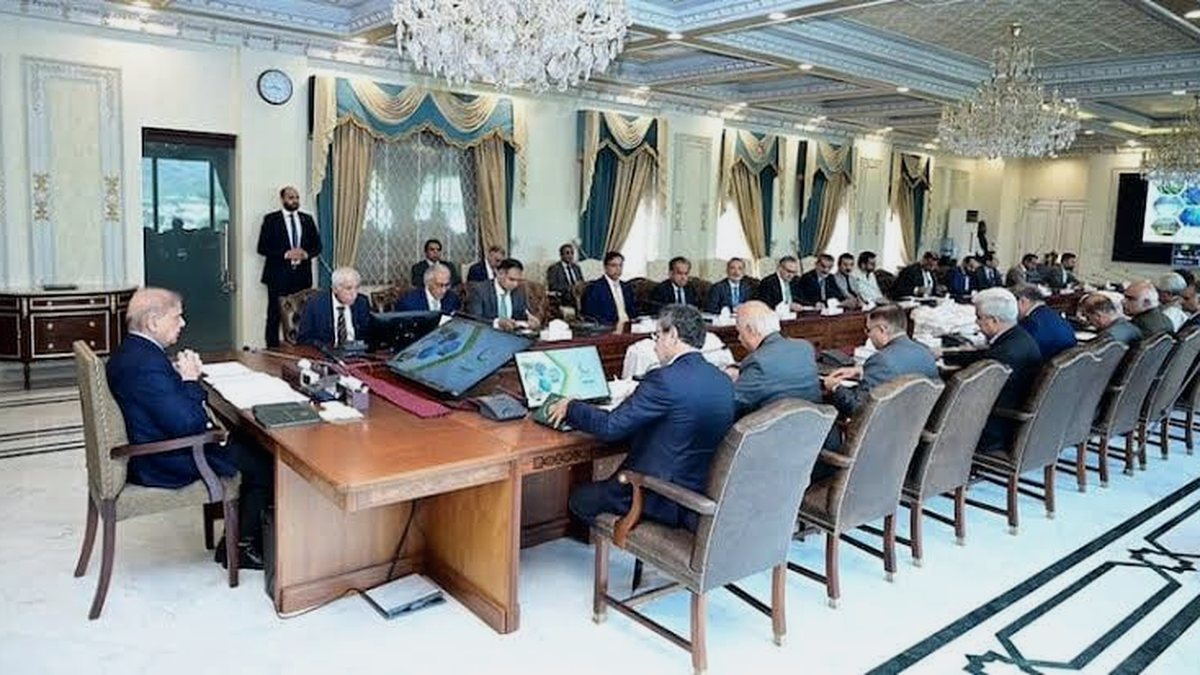
SIFC is the first acronym a foreign investor hears in Pakistan in 2026, and the most misunderstood. It is a coordination council, not a regulator. It can convene the Prime Minister, provincial chief ministers, federal secretaries and the army leadership, but it cannot itself incorporate a company, issue a tax exemption, allot land, grant a mining lease or approve a tariff. Its value is in sequencing, escalation and follow-through. This guide explains the mandate, the five-step engagement process, the sectors and projects that are actually moving, the approvals SIFC cannot replace, and the red flags to check before committing capital.
Need this handled for your company? PIVRA offers investment facilitation and agency liaison. Describe your case and we reply within two business days.
Or message us: WhatsApp · WeChat · Email · All contact options
The guide separates four things that are often confused in public announcements: a memorandum of understanding, a project approval, a financial close and money actually invested. It is an orientation for investors and advisers, not legal, tax or security advice.
1. What SIFC is
The Special Investment Facilitation Council was constituted by the Prime Minister in June 2023 under the government's Economic Revival Plan. Its stated purpose is to act as a single window for investment, coordinate federal and provincial departments, remove inter-agency bottlenecks and move priority projects faster (Board of Investment, SIFC). Its original outreach focus was the Gulf Cooperation Council (GCC), but its mandate and pipeline now cover a wider set of friendly countries and sectors.
SIFC is chaired by the Prime Minister. The Chief of the Army Staff and Chief of Defence Forces sits on the Apex Committee, and the military provides facilitation support. That composition is unusual by international standards and is central to how SIFC works: it can put a federal ministry, a provincial chief minister, a regulator and a security agency in the same room. It is also a reminder that SIFC is a political and administrative coordination body, not an independent court or regulator.
The current Secretary of SIFC is Jamil Ahmad Qureshi. The official contact point for investment proposals is invest@sifc.gov.pk. The Council's public material describes a five-step process: initiate contact, proposal evaluation, personalised engagement, follow-up with relevant stakeholders, and hand-holding through implementation.
2. The legal mandate, and why it matters
SIFC's legal footing is Chapter IIA of the Board of Investment Ordinance, 2001, sections 10A to 10C. The chapter establishes the Council, makes the Prime Minister its President, provides for a Secretary who is also the principal accounting officer, and sets out its scope and functions. The relevant fields named in the law include defence, agriculture, infrastructure development, strategic initiatives, logistics, minerals, information technology, telecommunications and energy. The federal government can notify additional sectors, industries or projects.
The functions are facilitative rather than regulatory. SIFC is to act as a single window for multi-domain cooperation, in particular with GCC countries, and to take measures to establish, facilitate, encourage and promote investment. A provincial government or an authorised entity can refer a sector, industry or project to SIFC. The Council can co-opt members and call in officials by special invitation.
A separate Cabinet Committee, the SIFC-CC, was notified in May 2024 to dispose of cases that fall within the Cabinet's purview. Its terms of reference track the SIFC's, and its decisions are placed before the federal cabinet for ratification (Cabinet Division notification, 27 May 2024). This matters to investors because it shows where SIFC sits in the decision chain: it can coordinate and recommend, but the legal power to approve a tax change, a tariff, a lease or a licence usually sits with the Cabinet, a regulator, a provincial government or a court.
| Instrument | What it does | Why an investor should care |
|---|---|---|
| Board of Investment Ordinance 2001, Chapter IIA | Creates SIFC and defines its scope and functions | Establishes SIFC as a facilitator, not a regulator |
| SIFC Cabinet Committee notification, May 2024 | Sets up SIFC-CC for cases within Cabinet purview; decisions go to the federal cabinet | Explains why some decisions still need Cabinet or cabinet committee approval |
| Investment Policy 2023 | Sets the general treatment of foreign investment, repatriation and dispute resolution | Provides the policy baseline that SIFC cannot override |
| Special Economic Zones (SEZ) Act 2012 and zone regulations | Govern special economic zones, developers and zone enterprises | Fiscal and land incentives usually come from the zone regime, not SIFC |
| Sector laws and regulators | Mining, power, telecom, pharmaceuticals, banking, Defence production | Each approval still runs through the relevant regulator |
3. How it is organised
SIFC operates through three committees and a set of sectoral working groups. The official description is an inclusive structure representing federal and provincial stakeholders at all tiers, with facilitation support from the military.
| Body | Role | What it means for an investor |
|---|---|---|
| Apex Committee | Chaired by the Prime Minister, with federal ministers, provincial chief ministers, the Chief of the Army Staff and the National Coordinator | Strategic decisions, cross-provincial deadlocks and issues that need political authority |
| Executive Committee | Chaired by the Federal Minister for Planning, Development and Special Initiatives, with federal and provincial officials | Project review, policy coordination and follow-up on sectoral bottlenecks |
| Implementation Committee | Senior officials and the SIFC secretariat, working with sector desks | Day-to-day tracking, information requests and resolution of administrative blocks |
| Sectoral Working Groups | Line ministries, regulators, provinces and private-sector representatives | Technical work on sector policy, project pipelines and approvals |
The committee structure is not a courtroom or a tender committee. It does not replace the SECP, the FBR, the State Bank, the provincial revenue department, the environmental protection agency or a sector regulator. Its leverage is that it can ask all of them, in one forum, to explain a delay and commit to a date.
In 2024 and 2025 the Council also brought in external capacity. It engaged A.T. Kearney for sector diagnostics, investment strategies and pre-feasibility work, and signed a memorandum of understanding (MoU) with the Public Private Partnership Authority for the "Invest Pakistan" project. The 11th Apex Committee in January 2025 approved an action plan to optimise special economic zones and reviewed a National Minerals Harmonisation Framework. These are process reforms, not individual investment approvals.
4. What SIFC actually does
The most useful way to understand SIFC is through its own five-step process.
- Initiate contact. Send a business proposal to invest@sifc.gov.pk. The proposal should be specific enough to evaluate: investor, sector, location, investment size, structure, financing, land and utility needs, jobs, technology, export plan and the decisions you need.
- Proposal evaluation. The SIFC team assesses investment potential, readiness and fit with the priority pipeline. A vague Expression of Interest is unlikely to move; a project with a sponsor, a site, a capital plan and a clear approval map is more likely to be taken up.
- Personalised engagement. If the proposal passes, SIFC arranges meetings with the relevant ministries, provinces, regulators and, where appropriate, the project's counterparties.
- Follow-up with stakeholders. If the initial engagement is positive, SIFC convenes follow-up meetings to resolve specific blockers and assign responsibilities.
- Hand-holding. SIFC describes support through each step, including coordination with implementing agencies. This is facilitation, not a guarantee that an approval will be granted.
In practice, SIFC's work falls into six buckets:
- Convening. Bringing federal ministries, provinces, regulators and investors together, often at short notice.
- Escalation. Moving a stalled file to a committee that can direct a department to respond.
- Pipeline development. Working with consultants and line ministries to turn sector opportunities into investable projects with pre-feasibility work.
- Investor outreach. Hosting foreign delegations and organising business-to-business (B2B) and government-to-government (G2G) meetings, as it did with US, Gulf, Chinese, Turkish and other business delegations in 2024 to 2026.
- Policy coordination. Feeding cross-cutting problems, such as SEZ optimisation, minerals harmonisation or business-community complaints, into the policy process.
- Visa and travel facilitation. Operating SIFC-specific business and investor visa routes through the NADRA visa portal.
5. What SIFC does not do
Five limits are worth stating plainly, because intermediaries often blur them.
- It is not a regulator. It cannot issue a licence, a tariff determination, a mining lease, an environmental approval or a banking licence. Those decisions remain with the statutory regulator or the province.
- It is not the tax authority. It cannot grant an income tax holiday, a customs exemption or a sales tax concession. Those come from the Finance Act, the Investment Policy, the SEZ regime or a sector-specific policy, and are administered by the FBR or the relevant authority.
- It is not a land allotment body. Land is provincial, district or zone-specific. SIFC can help unblock a land issue, but it cannot override title, land-use rules or a provincial lease process.
- It does not guarantee approvals or returns. A meeting at SIFC, an MoU or a photo opportunity is not a permit, a sovereign guarantee or an enforceable commitment to buy, fund or offtake.
- It does not replace due diligence. Political access is not a substitute for title checks, environmental assessment, counterparty verification, sanctions and AML screening, or legal advice on enforceability.
SIFC also does not publish a statutory decision clock. Unlike the State Bank's five-day account-opening rule, there is no published legal deadline for SIFC to evaluate a proposal or convene a meeting. Timelines depend on project readiness, the number of approvals and the willingness of the relevant departments to engage. A realistic sponsor plans in months, not weeks.
6. SIFC, BOI, provinces and regulators: who does what
| Body | What it decides or delivers | What SIFC can add |
|---|---|---|
| SIFC | Coordination, escalation, project pipeline, investor facilitation and follow-up | Convenes the relevant departments and tracks commitments |
| Board of Investment | Investment policy, branch and liaison office permission, SEZ policy, investment promotion | Works with BOI; SIFC does not replace BOI's statutory functions |
| Provincial boards of investment | Provincial land, zone and investment facilitation; provincial incentives | Connects the project to the chief minister's office and provincial departments |
| SECP | Company incorporation, filings, corporate approvals | Can help resolve inter-agency sequencing, not the incorporation decision |
| FBR | Tax registration, customs, sales tax, withholding | Can convene FBR and the investor to resolve a specific tax or customs bottleneck |
| State Bank of Pakistan | Foreign exchange, bank accounts, repatriation, share registration | Can help with inter-agency issues; SBP rules still apply |
| Sector regulator | NEPRA (power), OGRA (oil and gas), PTA (telecom), DRAP (medicines), SECP, provincial mining and environment authorities | Can escalate a delay, not substitute its technical judgment |
| Cabinet and SIFC-CC | Policy decisions, incentives, approvals that sit at Cabinet level | Prepares and routes the case; the Cabinet decides |
7. Priority sectors and the 2026 pipeline
The law names defence, agriculture, infrastructure, strategic initiatives, logistics, minerals, information technology, telecommunications and energy. SIFC's public material has emphasised agriculture and livestock, minerals and mining, IT and telecom, energy and defence production, with tourism, industry, health and logistics appearing in later pipelines. The table below translates the priority list into what a foreign investor can actually examine.
| Sector | What is being pitched | Entry route and main approvals | Diligence focus |
|---|---|---|---|
| Agriculture and livestock | Corporate farming, dairy, meat processing, seed, storage and export value chains | Provincial land and agriculture departments, livestock department, PARC, EPA, local government | Land title and water rights, offtake, veterinary and food-safety rules, logistics |
| Minerals and mining | Exploration, mining, processing and export of minerals, including the Khuzdar barite-lead-zinc project | Provincial mining department, lease and environmental approvals, federal minerals coordination | Lease security, reserves, royalties, community agreements, export logistics |
| IT and telecom | IT parks, data centres, software and BPO, telecom infrastructure, digital payments | PTA, PSEB, SECP, SBP for payments, provincial land and power | Connectivity, power reliability, data rules, tax treatment, talent |
| Energy | Generation, transmission, distribution, renewables, LNG, refining and grid infrastructure | NEPRA, Central Power Purchasing Agency (CPPA), Power Division, OGRA, provincial EPA | Tariff and payment security, curtailment, fuel supply, grid access |
| Defence production | Defence manufacturing, offsets and dual-use industrial partnerships | Ministry of Defence Production, security clearances, export controls | Security, end-use, technology transfer, procurement rules |
| Infrastructure and logistics | Ports, railways, roads, freight corridors, multimodal logistics and warehouses | Public Private Partnership Authority (P3A), National Highway Authority (NHA), Pakistan Railways, ports and provincial authorities | Concession terms, land, traffic risk, construction cost, payment mechanism |
| Industry and SEZs | Export manufacturing, textiles, pharmaceuticals, EVs, cement and industrial parks | SEZ authority, BOI, provincial industry department, EPA, utilities | Zone incentives, land, power and gas, customs treatment, labour |
| Tourism and health | Hospitality, medical tourism and healthcare services | Provincial tourism and health departments, DRAP for medicines, local permits | Land, security, demand, licensing and insurance |
The current pipeline is broader than the original five sectors. In September 2026 SIFC's Secretary told a National Assembly committee that the Council had developed an investment pipeline of about $40 billion across industry and production, oil and gas, railways, roads and infrastructure, power, telecommunications and IT, pharmaceuticals, tourism and food security and agriculture (Profit, 22 September 2026). That is a pipeline, not $40 billion of disbursed foreign direct investment (FDI). The distinction matters for any board paper.
8. What is actually moving
Four recent examples show the difference between a headline and an implemented project.
Khuzdar barite-lead-zinc
In August 2026 SIFC said it had resolved long-standing lease issues for a $200 million barite-lead-zinc project in Khuzdar, Balochistan, developed by Pakistan Petroleum Limited with Bolan Mining Enterprises. PPL is the operator with a 50 percent working interest. The project is reported to have reserves of 69 million tonnes, a 34-year mine life and expected annual revenue of $150 million to $230 million. The operational agreement was signed at the Pakistan Minerals Investment Forum 2025 (Profit, 4 August 2026). The lesson is not that mining is easy. It is that a project can sit on SIFC's agenda for years while a lease, a joint-venture term or a provincial approval is unresolved.
Challenge Special Economic Zone, Lahore
In July 2026 SIFC facilitated the signing of financing agreements for Phase I of the Challenge Special Economic Zone in Lahore, developed by Challenge Fashion. The financing involved the Bank of Punjab, Pak China Investment Company, Habib Metropolitan Bank, Bank of Khyber, BankIslami and Pak Libya Holding. SIFC described the transaction as a financial close and a step toward export-oriented manufacturing (SIFC press release, 30 July 2026). Financial close is a stronger milestone than an MoU, but it is still not the same as full operations.
DP World freight corridor
DP World and Pakistan Railways signed a term sheet in January 2025 for a dedicated freight corridor from Karachi Port to Pipri and a multimodal logistics park, following a framework agreement in January 2024. SIFC convened DP World, Pakistan Railways and the National Logistics Corporation. The project is designed to move freight by rail and reduce pressure on Karachi's roads (SIFC press release, 10 January 2025). A term sheet is a framework; construction and financing terms still have to be completed.
Delegations and business-to-business work
In August 2026 SIFC facilitated a US business delegation across Islamabad, Karachi and Lahore, with meetings at the Sindh and Punjab chief minister offices, the Bin Qasim and Karachi industrial parks, the Karachi Port Trust and business councils. The delegation discussed IT, AI, healthcare, agriculture, manufacturing, infrastructure, minerals, SEZs and maritime investment (SIFC press releases, 1 and 2 August 2026). A delegation is not a commitment. Its value is in the introductions and the follow-up, which is where most investment promotion fails.
Other current facilitation claims should be read with the same discipline. In May 2026 the Secretary of the Apex Committee said SIFC had facilitated seven new cement factories, was working on the M-12 motorway and had launched a medical tourism initiative (Radio Pakistan, 7 May 2026). The government has also cited about $2.3 billion in foreign investment inflows in the first year after SIFC's creation, and about $148 million in mergers and acquisitions in the first eight months of FY2024-25, alongside a 41 percent rise in FDI to $1.618 billion over the same period (Profit, 20 May 2025; Profit, 15 April 2025). These are economy-wide or government-reported figures, not a SIFC-only scorecard.
9. Incentives: what SIFC can and cannot deliver
SIFC is not the source of tax, customs or land incentives. The baseline is the Investment Policy 2023, which sets out the general treatment of foreign investment, including repatriation and dispute resolution. Sector-specific incentives sit in the SEZ Act 2012 and zone regulations, the renewable energy and refinery policies, the IT and telecom policies, provincial industrial policies and the annual Finance Act. SIFC can help an investor understand which regime applies and can escalate an implementation problem, but it cannot create an entitlement that the law does not provide.
| Instrument | What it can offer | Where to confirm |
|---|---|---|
| Investment Policy 2023 | General treatment, repatriation principles and dispute-resolution framework | Board of Investment and the published policy |
| SEZ Act 2012 and zone rules | Fiscal and procedural package for zone developers and enterprises | BOI, the relevant SEZ authority and the zone developer |
| Sector policies | Renewable energy, refinery, EV, IT, agriculture and other sector-specific terms | The line ministry and regulator |
| Finance Act and FBR rules | Tax rates, customs duties, exemptions and withholding | FBR and the current Finance Act |
| State Bank foreign exchange rules | Repatriation, share registration and bank accounts | State Bank and the authorised dealer |
| Provincial incentives | Land, stamp duty, utility connections and provincial tax treatment | Provincial board of investment and finance department |
For the tax and customs baseline, see PIVRA's guide to taxes for foreign companies and customs tariff guide. For repatriation, see the profit repatriation guide and the corporate bank account guide. SIFC facilitation does not change those rules.
10. The approval map
A project that reaches SIFC still needs the ordinary approvals. The map below is a starting point, not a substitute for a project-specific legal and regulatory review.
| Stage | Typical authority | What can go wrong |
|---|---|---|
| Entity and ownership | SECP, Board of Investment for branch or liaison office | Structure chosen before tax and repatriation advice; foreign shareholder documents incomplete |
| Tax and customs | FBR, provincial revenue authority | Registration after the investment; incorrect HS classification; missing withholding set-up |
| Land and site | Provincial revenue, industrial development authority, SEZ authority, local government | Title or lease not clean; land-use change; encroachment; utility easements |
| Environmental and social | Provincial EPA, forest and wildlife departments | Category of assessment underestimated; community consultation left late |
| Sector licence | NEPRA, OGRA, PTA, DRAP, mining department, Defence Production | Technical application incomplete; security clearance; tariff or licensing conditions |
| Foreign exchange and banking | State Bank, authorised dealer | Capital injection not documented; share registration missed; repatriation blocked later |
| Construction and utilities | Development authority, utility companies, NHA, ports and railways | Power and gas connection delays; right of way; construction permits |
| Operations | Labour, social security, Employees' Old-Age Benefits Institution (EOBI), provincial inspectors | Employer registrations, contributions and inspections after start-up |
For a large project, the realistic sequence is concept, pre-feasibility, site control, environmental screening, regulatory pre-application, financial structuring, approval, financial close and construction. SIFC can compress the coordination time between those steps, but it cannot compress the technical work, the statutory consultation or the financing.
11. How to engage: a proposal that can survive scrutiny
SIFC's official channel is email. A useful first submission is ten to fifteen pages, not a hundred-slide deck. It should answer the questions a ministry, a province and a lender will ask.
- Investor. Legal name, ownership, ultimate beneficial owners, track record, balance sheet and the entity that will invest.
- Project. What will be built or operated, where, at what capacity and for which customers.
- Sector fit. Which priority sector or notified field the project falls under, and why it is strategic.
- Capital. Total investment, debt-equity split, sources of equity, lenders in discussion and foreign exchange plan.
- Land and utilities. Site status, title or lease, water, power, gas, access and any provincial support requested.
- Approvals. The licences and registrations needed, the authority responsible and the expected sequence.
- Economic impact. Jobs, exports, import substitution, technology transfer, local procurement and tax contribution. Use defensible numbers, not multipliers.
- Timeline. A realistic schedule with decision points, construction period and first revenue.
- Risks. The top five project risks and how they will be mitigated.
- Ask. The specific decisions or introductions requested from SIFC. "Support" is not an ask; "resolve the lease transfer at X" is.
Send the proposal to invest@sifc.gov.pk and copy the relevant ministry, provincial board of investment or regulator where appropriate. Keep a record of every submission and meeting. Do not send original title deeds, passports or bank documents by email; share sensitive documents through a secure channel after the counterparty is verified.
Expect SIFC to route a smaller or purely commercial project to the Board of Investment, a provincial board of investment or the sector ministry. SIFC's comparative advantage is a project with a cross-agency blockage, a strategic investor or a government-to-government dimension. A small retail or service business may get a faster answer from the provincial one-window facility.
12. Visas and travel
SIFC operates two visa routes through the NADRA visa portal. The business visa is for people seeking to establish or expand a business in Pakistan. The investor visa is for people looking to invest in Pakistan's priority sectors. The official SIFC page lists the following terms, which should be confirmed with SIFC and NADRA before travel.
| Route | Duration and validity | Processing time listed by SIFC | Core documents |
|---|---|---|---|
| Business visa, short term | 6 months, single entry | 24 hours | Passport, photograph, SIFC recommendation letter or email |
| Business visa, long term | 2 years, multiple entries, 5-year validity | 24 hours | Same, plus the business case |
| Investor visa, short term | 3 years, multiple entries | 24 hours | Passport, photograph, SIFC recommendation |
| Investor visa, long term | 5 years, multiple entries | 10 days | Same, plus investment evidence |
The visa is a travel document, not an investment approval. Security clearance and the underlying project approvals are separate. For business visitors from countries on Pakistan's business visa list, the NADRA portal is the starting point; for others, confirm the route with SIFC before buying a ticket.
13. Due diligence and red flags
SIFC's convening power is real, and so is the risk of people claiming to represent it. The following checks are basic.
- "SIFC approved" is not a legal status. Ask for the written approval, the authority that issued it and the condition sheet. A meeting, an MoU or a letter of support is not an approval.
- Verify the intermediary. SIFC's official contact is invest@sifc.gov.pk. Confirm any adviser's mandate in writing and check whether they are registered with the SECP or a professional body. Do not pay a success fee for "access" before the work is defined.
- Separate announcement, MoU, financial close and disbursement. Ask for the date, the signatories, the amount, the conditions and the evidence of funds. A press release is not a closing.
- Check the land. Confirm title, lease term, land use, encumbrances and provincial approvals. A federal facilitation letter does not cure a defective title.
- Check the counterparty. Beneficial ownership, litigation, sanctions, past projects and related-party transactions. SIFC is not a substitute for KYC.
- Check the environmental and social file. Category, terms of reference, public consultation, resettlement and community commitments. These are often the longest lead items.
- Check the offtake and payment security. For power, infrastructure and mining, the tariff, the payment mechanism and the sovereign or corporate credit behind it matter more than the launch event.
- Check the security and political risk. Project location, travel, site security, local political agreements and the possibility of policy change. Use a specialist security adviser for high-risk districts.
- Check the exit. Repatriation, dividend, share transfer, arbitration and tax on exit. A project that cannot return capital is not an investment.
- Check the numbers. Independent technical, market, financial and legal due diligence. A government facilitation platform does not validate a feasibility study.
14. Investor checklist
- Project note with investor, capital, site, approvals, timeline and a specific ask.
- Written confirmation of the SIFC, BOI or provincial contact and the meeting record.
- Legal structure and tax plan reviewed before the first commitment.
- Land title, lease and land-use verification.
- Environmental and social screening and the regulator's category.
- Sector licence pre-application and a named case officer.
- Financing plan with lenders, security and foreign exchange route.
- Counterparty, beneficial ownership and sanctions checks.
- Security assessment and site visit.
- Repatriation and exit plan, including share registration.
- Independent technical, market and financial due diligence.
- A decision log that distinguishes announcement, MoU, approval, financial close and disbursement.
15. How PIVRA can help
PIVRA works on investment facilitation and agency liaison: preparing the project note, mapping the approvals, arranging official introductions, preparing for meetings and following up with the relevant departments, with the client present at every meeting. We do not promise approvals, and we do not pay or accept success fees for access. We also provide market entry, investment due diligence and registration and licensing support.
If you want a second opinion on an SIFC-linked proposal, send the project note and the approval trail. We will tell you what is missing before you commit capital.
Sources
All sources were accessed on 24 October 2026. Where a figure is a government or company claim, the text says so; a pipeline figure is not disbursed investment.
- Special Investment Facilitation Council, official website, including the organisation page, the five-step engagement process, sector pages and visa pages, accessed 24 October 2026.
- Board of Investment, Special Investment Facilitation Council, accessed 24 October 2026.
- Cabinet Division, notification constituting the SIFC Cabinet Committee, 27 May 2024, with the text of Chapter IIA of the Board of Investment Ordinance, 2001.
- SIFC press releases on the Challenge SEZ financial close (30 July 2026), the US business delegation (1 and 2 August 2026), the Türkiye agriculture MoUs (12 February 2026), the Kuwait delegation (21 January 2026), the DP World term sheet (10 January 2025) and the 11th Apex Committee (2 January 2025).
- Associated Press of Pakistan, Secretary SIFC highlights investment facilitation at NIPA, 2026.
- Radio Pakistan, SIFC playing pivotal role in bringing investment to Pakistan, 7 May 2026.
- Profit, SIFC lines up $40 billion investment pipeline across energy, infrastructure, IT, 22 September 2026.
- Profit, SIFC clears way for $200m Khuzdar mining investment, 4 August 2026.
- Profit, SIFC facilitates $2.3 billion in foreign investment since inception, NA informed, 20 May 2025.
- Profit, SIFC facilitates $148mn in mergers and acquisitions, 15 April 2025.
- NADRA, SIFC investor visa and business visa list, accessed 24 October 2026.
- Pakistan Investment Policy 2023 and Board of Investment, special economic zones, accessed 24 October 2026.